Green Energy & Renewables.
HOW DOES A HEAT PUMP WORK?
Simply Put, a heat pump is a device that transfers thermal Energy from one point to another. A common example of this can be found in our refrigerators where the evaporation and cooling of a liquid is used to lower the temperature of the storage compartment.
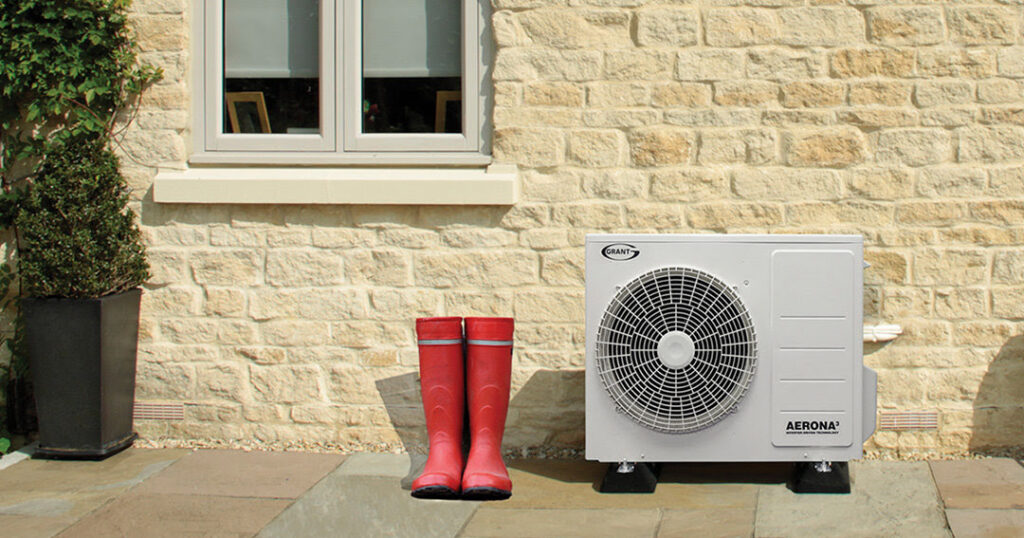
Nowadays, this technology can also be used to extract the potential thermal energy from the air outside, or even from the ground, feeding it directly into your home where it is compressed, and the heat transferred using a series of coils. It sounds like magic but the science behind it is relatively simple.
In a nutshell, an air source heat pump, for example, works by extracting heat from the air outside using a fan and refrigerant, amplifying it via a compressor, and then feeding it into your house using your central heating system. This process works on a cycle that is powered by a relatively low amount of electricity in relation to the heat delivered.
Here is the step-by-step process of how an air source heat pump works:
- Draws in air: The heat pump draws in air from outside, no matter what the temperature is outside.
- Heats the refrigerant: The air is passed across a heat exchange surface, which heats a refrigerant liquid and turns it into a gas.
- Compresses the gas: The gas is then moved through a compressor, which increases the pressure and temperature.
- Transfers heat: The heated gas is passed across the internal heat exchange surface, where it transfers heat into your home’s central heating system or hot water.
- Cools the gas: As the heat is transferred, the gas cools and turns back into liquid form.
- Repeats: The liquid is pumped back outside to start the cycle all over again.
Heat pumps can be up to three times more efficient than gas boilers. They can also be cheaper to run than some conventional heating technologies. Even in cold weather, heat pumps can still work effectively. They can take heat energy from the air or ground, even when it’s very cold outside.
Although they use a small amount of electricity to run, heat pumps are considered highly efficient and clean because they don’t depend on burning fuel to create heat. They perform well in moderate climates such as the UK and can provide heating during the winter, even at temperatures around -20 degrees Celsius in some models (performance and efficiency vary significantly by system and design)
It’s also possible to combine heat pumps with other heating systems, like gas in hybrid configurations.